




Electric Car Charging: The Basics
For those of you new to zero-emission electric driving, we recommend a read of the following articles:
Different Type Of Electric Vehicles (EVs): The Complete Electric Car Buying Guide For Ireland
Electric Car Charging: The Basics For those of you new to zero-emission electric driving, we recommend a read of the following articles: Sign up to the e-zoomed Electric Living…
Read More
Benefits Of Electric Driving: The Complete Electric Car Buying Guide For Ireland
Electric Car Charging: The Basics For those of you new to zero-emission electric driving, we recommend a read of the following articles: Sign up to the e-zoomed Electric Living…
Read More
What Is Regenerative Braking: The Complete Electric Car Buying Guide For Ireland
Electric Car Charging: The Basics For those of you new to zero-emission electric driving, we recommend a read of the following articles: Sign up to the e-zoomed Electric Living…
Read More
Benefits Of Green Energy: A Guide For Ireland
Electric Car Charging: The Basics For those of you new to zero-emission electric driving, we recommend a read of the following articles: Sign up to the e-zoomed Electric Living…
Read More
EV Charging Cables: The Complete Electric Car Buying Guide For Ireland
Electric Car Charging: The Basics For those of you new to zero-emission electric driving, we recommend a read of the following articles: Sign up to the e-zoomed Electric Living…
Read More
How Much Does It Cost To Charge An Electric Car At Home: The Complete Electric Car Buying Guide For Ireland
Electric Car Charging: The Basics For those of you new to zero-emission electric driving, we recommend a read of the following articles: Sign up to the e-zoomed Electric Living…
Read MoreSign up to the e-zoomed Electric Living newsletter
Introduction: Vehicle-to-Grid (V2G) Bidirectional EV Charging
Though V2G charging may be an evolving technology tied closely to the development and maturity of electric vehicles, the research on V2G technology has been on since 1997. The 2011 Fukushima Daiichi nuclear disaster further ‘catalysed’ the research on vehicle-to-grid technology, to find solutions to further improve grid stability and resilience in such adverse predicaments.
It is such pioneering research that has led to a wider commercialisation of this technology today. Key stakeholders like, automotive manufacturers, grid networks, charge point manufacturers and others, are committed to further developing the immense potential of V2G application. We can expect this ‘multi-sector collaboration’ to only intensify as we migrate to widespread deployment of electric cars globally.
V2G is an innovative bidirectional technology that allows the onboard EV battery to be charged and discharged i.e. electrical energy to be exported/ discharged from the onboard EV battery to the grid via a V2G compatible EV charger. It also allows for vital informational flow (data) to the grid. In effect, the V2G technology allows an EV battery to be used as a grid-connected energy storage unit.
Like conventional petrol and diesel cars, do expect electric vehicles to be parked the majority of the time. V2G helps leverage this ‘idle time’ to support the electricity grid network, in particular, in times of peak demand (also sometimes referred to as Demand Side Response). When responding to the requirements of the grid, EVs could charge to their maximum level or change their rate of charging when the supply is high and subsequently, EV batteries could inject electricity back to the grid during peaks in consumption or in response to grid demands thereby serving as temporary energy storage units. Off-peak rates have lower tariffs while peak rates have higher tariffs resulting in cost efficiencies for EV owners i.e. making you cash!
V2G also offers scope for incorporating a greater share of intermittent renewable energy (RE) in the grid, by allowing EVs to act as decentralised storage units during periods which are conducive for increased RE production.
You can take advantage of V2G sitting in the comfort of your home enjoying a cup of tea, whilst your EV parked in the garage evacuates the power to the grid. You will need to install a V2G charger that allows bidirectional charging. If the V2G charger is also installed in your workplace, then you could also sell electricity while your car is parked at work.
V2G will also help reduce the overall infrastructure investment and ‘pressure’ for the National Grid and Distribution Network Operators (DNOs), as every home has the potential to become a stand-alone on-site generator and consumer of electricity by leveraging renewable energy via small-scale solar panel (photovoltaic) or small-scale wind turbines (wind energy).
A number of V2G trials are already underway globally. There are currently 107 projects across 25 countries involving 6,600 + V2G enabled EV chargers. Though the potential for V2G is immense, a number of challenges remain, to enable widespread adoption of this technology. Some of these include:
- Regulations need to be developed. In particular, in relation to data privacy etc.
- EV chargers compatible with V2G technology limited.
- Electric cars compatible with V2G technology limited.
- Costs for enabling V2G technology are still high.
- Awareness of V2G technology and its benefits is limited.
Benefits Of Vehicle-to-Grid (V2G) Bidirectional EV Charging
| Benefits: V2G | |
|---|---|
| Lower energy costs: | V2G can lower utility costs to include, lowering wholesale and retail energy costs |
| Improving the grid’s response ability: | V2G can improve the stability of the intra-day supply and demand needs, improving the grids ability to meet the needs of peak demand |
| Improving power quality: | V2G can improve power quality by controlling voltage and power factors |
| Increase resilience: | V2G can improve the resilience of the grid and electricity network in significantly adverse conditions |
| Increase use of renewable energy: | V2G enables an increase in the contribution of renewable energy to the national energy generation mix. The higher the contribution of RE, the greener the power supplied |
| Reduce cost of EV ownership: | V2G can reduce the cost of EV ownership by enabling EV owners to earn from exporting energy to the grid |
| Improves national energy security: | V2G can improve the national energy security of a country by reducing dependence on imported energy |
| Improve environmental impact: | V2G can improve the environmental impact of energy usage and transportation by reducing the dependence on fossil fuels |
Wallbox Quasar: The First Bidirectional Charger For Home Use
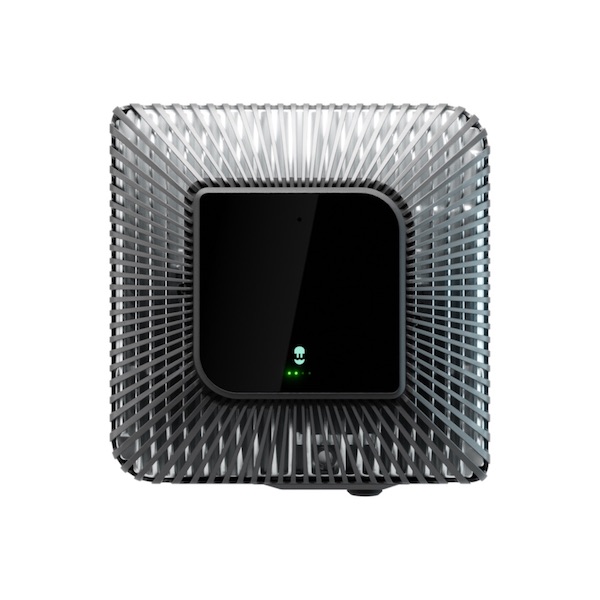
Innovation at the leading edge, the Quasar home EV charger is set to revolutionise electric car charging with vehicle-to-grid (V2G) capability. The electric car battery can be used to power your electric car and your home. Quasar is the lightest and smallest DC charger of its kind.
Key Features And Specifications
| Key Features | Quasar Home EV Charging (7.4kW) |
|---|---|
| Model: | Quasar |
| Charger: | DC |
| Connector Type: | CHAdeMO |
| Dimensions: | 350x350x150mm (without cable) |
| Weight: | 15.5 kg (without cable)/ 22 kg (with cable) |
| Cable length: | 5m |
| Maximum Output: | 7.4 kW (1P) |
| Protection Rating: | IP54 / IK08 |
| Connectivity: | Wi-Fi / Ethernet / Bluetooth / 3G/4G Connection |
| User Identification: | Face Recognition / Wallbox App / RFID |
| User Interface: | Gesture Sensor / Wallbox App |
| Charging Status Info: | RGB LED / Screen information |
Buying EV Cables: Top 3 Tips
When it comes to electric car charging cables, an astute electric car owner will focus on quality and performance over cheapest price. We at e-zoomed have an excellent range of high quality and high performance electric car charging cables, all priced very competitively! At e-zoomed we offer charging cables from 2m to 50m for single-phase and three-phase EV charging cables as standard.
| EV Cables: Top 3 Tips | |
|---|---|
| Never buy cheap: | Not all EV charging cables are the same. It is simply false economy to try and save a few Euro’s on buying a cheaper cable, when in all probability the EV you own is worth over €30,000! Nor are we suggesting you buy the most expensive. There is always a balance between price and quality, and electric car charging cables are no different. The last thing you need is to have the EV charging cable stop working when you most need it. EV cables on the e-zoomed Electric Living Shop are made from TPU (Thermoplastic Polyurethane), a higher quality material that is extremely flexible, durable and smooth to touch. |
| The shortest length is never the best choice: | A number of customers seek the shortest length (2m EV charging cable) because it is the cheapest. However a 2m EV cable is limited in practicality and usually not a good long-term investment. Most charging destinations (home or public) require an EV charging cable that is longer than 2m. In our experience, most customers buy EV charging cables between 5m and 25m. We recommend at least a 5m charging cable. It is long enough to meet most charging needs, but compact enough to be carried and put away easily! Of course, a number of customers need even longer EV cables. |
| A lower technical specification EV charging cable Is never the best choice: | As above, a number of electric car owners seek to buy a 16 amp (single-phase) EV charging cable, instead of a 32 amp (single-phase) EV charging cable. The reason is simple. The 16 amp is marginally cheaper! However, a 16 amp charging cable charges at 3.6kW, a much slower rate to a 32 amp EV charging cable that charges at 7.2 kW. An ampere is the unit for measuring electricity. The accepted standard unit used for measuring how fast an electric current flows is an example of an ampere. The reason why customers in Ireland buy a single-phase EV cable, is because most homes in Ireland are powered by single-phase power supply. Also important to asses is the IP Rating for the EV cable. Not all EV cables have the same IP Rating. Of course, warranty is also important. Most EV cables are sold with a warranty of at least 2 years! |
While e-zoomed uses reasonable efforts to provide accurate and up-to-date information, some of the information provided is gathered from third parties and has not been independently verified by e-zoomed. While the information from the third party sources is believed to be reliable, no warranty, express or implied, is made by e-zoomed regarding the accuracy, adequacy, completeness, legality, reliability or usefulness of any information. This disclaimer applies to both isolated and aggregate uses of this information.
Featured Articles

What Is Vehicle-To-Home (V2H) Bidirectional Charging: The Complete Guide For Ireland
Electric Car Charging: The Basics For those of you new to zero-emission electric driving, we recommend a read of the following articles: Sign up to the e-zoomed Electric Living…
Read More
What Is Vehicle-To-Load Charging (V2L) In Electric Cars? What Are The Benefits Of V2L?: The Complete Electric Car Buying Guide For Ireland
Electric Car Charging: The Basics For those of you new to zero-emission electric driving, we recommend a read of the following articles: Sign up to the e-zoomed Electric Living…
Read MoreBenefits Of Green Energy: A Guide For Ireland
Electric Car Charging: The Basics For those of you new to zero-emission electric driving, we recommend a read of the following articles: Sign up to the e-zoomed Electric Living…
Read More
EV Home Charger Grant: The Complete Electric Car Buying Guide For Ireland
Electric Car Charging: The Basics For those of you new to zero-emission electric driving, we recommend a read of the following articles: Sign up to the e-zoomed Electric Living…
Read More
What Is Battery Storage? What Are The Benefits Of An Energy Storage System?
Electric Car Charging: The Basics For those of you new to zero-emission electric driving, we recommend a read of the following articles: Sign up to the e-zoomed Electric Living…
Read MoreFeatured Products
-
Tethered myenergi eco-smart zappi Home EV Charger (7kW, 6.5m): price includes product only – free delivery
€1,150.95 (Including VAT)Brand:myenergiCategory:EV Charging PointsCable:UntetheredThis product has multiple variants. The options may be chosen on the product page -
Custom-Made 1-Phase EV Charging Cable Type 2 to Type 2 (2m to 45m, 7.4 kW) – Made In Europe – Free Delivery
Price range: €219.95 through €645.95 (Including VAT)Category:EV Charging CablesType:Type 2Length (m):5 m10 m6 m15 m20 m2 m25 m30 m35 m40 m45 m3 m7 m8 m12 m18 m22 mCurrent (amp):32 ampPhase:Single Phase (7.4kW)This product has multiple variants. The options may be chosen on the product page -
Custom-Made 3-Phase EV Charging Cable Type 2 to Type 2 (2m to 45m, 22 kW) – Made In Europe – Free Delivery
Price range: €229.95 through €755.95 (Including VAT)Category:EV Charging CablesType:Type 2Length (m):5 m10 m6 m15 m20 m2 m25 m30 m35 m40 m45 m3 m7 m8 m12 m18 m22 mCurrent (amp):32 ampPhase:Three Phase (22kW)This product has multiple variants. The options may be chosen on the product page -
Custom-Made 1-Phase Tesla Compatible EV Cable Type 2 to Type 2 (2m to 25m, 7.4 kW, Black) – Made In Europe – Free Delivery
Price range: €265.95 through €490.95Brand:evck-TeslaCategory:EV Charging CablesType:Type 2Length (m):5 m10 m6 m15 m20 m2 m25 m3 m8 m12 m18 m22 mPhase:Single Phase (7.4kW)This product has multiple variants. The options may be chosen on the product page


