




The majority of electric vehicles (EVs) are charged at home. Getting to know your electricity bill is more imperative today, than anytime in the past!
Despite the headlines on public EV charging infrastructure, in reality, the majority of electric cars are charged at home, and usually overnight. There are numerous benefits in charging an EV at home, to include financial savings as a key advantage.
Charging an electric vehicle (EV) at home can result in significant annual savings for the household wallet. Given the continued inflation of petrol and diesel prices across the country, there is no better a time to switch to zero-tailpipe emission electric driving and save money. As an example, as of October 2025 petrol prices are as high as €1.71 per litre in Ireland. Diesel is at €1.66 per litre. Filling a full tank of fuel can cost as much as €100, if not more. In comparison, charging an electric car at home is significantly lower!!
Yes, it is true, in that, residential energy prices have also witnessed a surge in the recent months. However, despite the surge in energy prices, the savings achieved by charging an electric car at home remains substantial. Households with on-site solar and battery storage achieve the highest savings in the long-term.
Top Tips For Saving Money On Home EV Charging
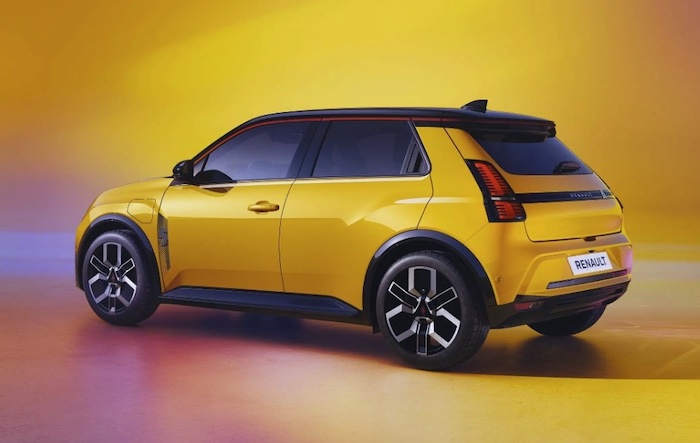
For owners of a battery-electric vehicle (BEV) i.e. a pure electric car like the all-electric Renault 4, we recommend below a few helpful tips in helping you achieve the maximum savings offered by charging an EV at home.
Keep in mind, a household that owns an electric car can expect an additional yearly consumption of 2,800 kWh added to their home energy bill. For some EVs with larger EV batteries and higher electric energy consumption per km, the kWh consumed could be even higher. According to the Commission for Regulation of Utilities (CRU.ie), the average annual usage of electricity for an Irish household is 4,200 kWh (kilowatt-hour is a measure of energy consumption). So you can see that the increased consumption from the use of an electric car charging at home, is material!
| Top 5 Tips Saving Money For Home EV Charging |
|---|
| Get to know your home energy bill! |
| Identify energy suppliers that offer EV specific charging plans (preferably green energy suppliers). |
| Charge your EV when the tariff is the cheapest (usually overnight). |
| Install solar panels. |
| Use battery storage. |

Lastly, we strongly encourage EV owners not to use a standard domestic plug to charge an electric car. The best way to charge an electric car at home is by using a high quality dedicated home EV charger, like the Easee One home EV charger. The average cost for the supply and installation of a dedicated home EV charger is between €500 and €1,200. The e-zoomed Electric Living Shop offers a fantastic range of high quality EV charging cables from 2m to 45m. Follow this link to learn more!
Electric Cars: The Basics
For those of you new to zero-emission electric driving, we recommend a read of the following articles:
Different Type Of Electric Vehicles (EVs): The Complete Electric Car Buying Guide For Ireland
The majority of electric vehicles (EVs) are charged at home. Getting to know your electricity bill is more imperative today, than anytime in the past! Despite the headlines on…
Read More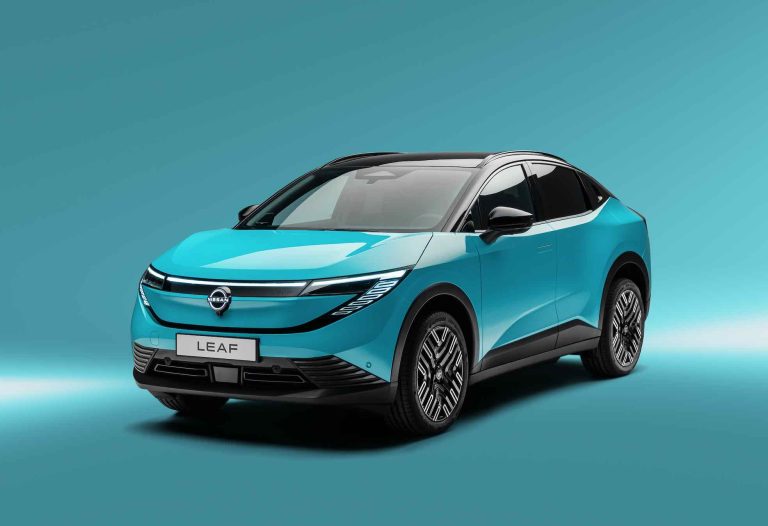
Benefits Of Electric Driving: The Complete Electric Car Buying Guide For Ireland
The majority of electric vehicles (EVs) are charged at home. Getting to know your electricity bill is more imperative today, than anytime in the past! Despite the headlines on…
Read More
What Is Regenerative Braking: The Complete Electric Car Buying Guide For Ireland
The majority of electric vehicles (EVs) are charged at home. Getting to know your electricity bill is more imperative today, than anytime in the past! Despite the headlines on…
Read MoreSign up to the e-zoomed Electric Living newsletter
EV Home Charging: Costs
Your home electricity bill will include the kWh consumed by your household for the period of the bill. Though the price of electricity depends on the type of tariff and time of the day/ night, the average cost of electricity at home in the Ireland is 34.29 cents/kWh i.e. per unit of consumption. The average cost also varies depending on the region in Ireland and the specific energy supplier.
An easy way to calculate EV home charging costs, is simply to take the EV battery size and multiply by the electricity cost per kWh and then divide by 100. As an example, let’s assume the EV has a 64 kWh EV battery and the electricity tariff is 34.29 cents/kWh. Multiple (64kWh X €4.29 cents)/100 = €21.95. Really, quite as simple as that! The best-selling all-electric Nissan Leaf will cost €13.71 to fully charge the 40 kWh EV battery and €21.25 to charge the variant with the 62 kWh EV battery.
| Average Cost Of Residential Charging | |
|---|---|
| Battery net capacity: 12.4 kWh | € 4.25 |
| Battery net capacity: 16.7 kWh | € 5.73 |
| Battery net capacity: 26.6 kWh | € 9.12 |
| Battery net capacity: 30.0 kWh | € 10.29 |
| Battery net capacity: 39.2 kWh | € 13.44 |
| Battery net capacity: 45.0 kWh | € 15.43 |
| Battery net capacity: 50.0 kWh | € 17.15 |
| Battery net capacity: 64.0 kWh | € 21.95 |
| Battery net capacity: 71.0 kWh | € 24.35 |
| Battery net capacity: 77.0 kWh | € 26.40 |
| Battery net capacity: 90.0 kWh | € 30.86 |
| Battery net capacity: 100.0 kWh | € 34.29 |
| Battery net capacity: 112.0 kWh | € 38.40 |
| Battery net capacity: 120.0 kWh | € 41.15 |
| Battery net capacity: 130.0 kWh | € 44.58 |
- Note 1: The average cost of residential electricity in Ireland varies depending on the region, supplier and type of energy used. An average for Ireland is 34.29 cents/kWh. Best to charge an EV overnight when the rates are the lowest.
- Note 2: Not all EV manufactures make available the data on net EV battery capacity, and in a number of instances the EV battery capacity advertised, does not state if it is gross or net capacity. In general, usable EV battery capacity is between 85% to 95% of the gross available capacity.
Of course, to charge a plug-in hybrid electric car (PHEV) is cheaper than charging a pure electric car (BEV), as a PHEV has a much smaller EV battery. Pure electric cars come in varied EV battery sizes, but in general, we are witnessing an increase in the size of the EV battery, to achieve a longer zero-tailpipe emission electric range. An average EV battery size is around 64 kWh. Yes, range anxiety is history!
An EV battery is just like a fuel tank (capacity). The larger its size, the longer the range, but the more expensive to fill or charge! Of course, in the case of EVs, the larger the EV battery, the longer the time to fully charge! The cost of filling a full tank of petrol is the combination of the size of the fuel tank (litres) and the price per litre. An EV battery is no different, in that the cost of charging an electric car at home is the combination of the EV battery size (fuel tank capacity) and the cost per kWh (cents per litre).
While e-zoomed uses reasonable efforts to provide accurate and up-to-date information, some of the information provided is gathered from third parties and has not been independently verified by e-zoomed. While the information from the third party sources is believed to be reliable, no warranty, express or implied, is made by e-zoomed regarding the accuracy, adequacy, completeness, legality, reliability or usefulness of any information. This disclaimer applies to both isolated and aggregate uses of this information.
Featured Articles

What Is Vehicle-To-Load Charging (V2L) In Electric Cars? What Are The Benefits Of V2L?: The Complete Electric Car Buying Guide For Ireland
The majority of electric vehicles (EVs) are charged at home. Getting to know your electricity bill is more imperative today, than anytime in the past! Despite the headlines on…
Read More
What Is Vehicle-To-Grid (V2G) Bidirectional Charging In Electric Cars? What Are The Benefits Of V2G?: The Complete Electric Car Buying Guide For Ireland
The majority of electric vehicles (EVs) are charged at home. Getting to know your electricity bill is more imperative today, than anytime in the past! Despite the headlines on…
Read More
What Is Battery Storage? What Are The Benefits Of An Energy Storage System?
The majority of electric vehicles (EVs) are charged at home. Getting to know your electricity bill is more imperative today, than anytime in the past! Despite the headlines on…
Read More
What Is Vehicle-To-Home (V2H) Bidirectional Charging: The Complete Guide For Ireland
The majority of electric vehicles (EVs) are charged at home. Getting to know your electricity bill is more imperative today, than anytime in the past! Despite the headlines on…
Read More
Benefits Of Green Energy: A Guide For Ireland
The majority of electric vehicles (EVs) are charged at home. Getting to know your electricity bill is more imperative today, than anytime in the past! Despite the headlines on…
Read MoreFeatured Products
-
Custom-Made 1-Phase EV Charging Cable Type 2 to Type 2 (2m to 45m, 7.4 kW) – Made In Europe – Free Delivery
Price range: €219.95 through €645.95 (Including VAT)Category:EV Charging CablesType:Type 2Length (m):5 m10 m6 m15 m20 m2 m25 m30 m35 m40 m45 m3 m7 m8 m12 m18 m22 mCurrent (amp):32 ampPhase:Single Phase (7.4kW)This product has multiple variants. The options may be chosen on the product page -
Custom-Made 3-Phase EV Charging Cable Type 2 to Type 2 (2m to 45m, 22 kW) – Made In Europe – Free Delivery
Price range: €229.95 through €755.95 (Including VAT)Category:EV Charging CablesType:Type 2Length (m):5 m10 m6 m15 m20 m2 m25 m30 m35 m40 m45 m3 m7 m8 m12 m18 m22 mCurrent (amp):32 ampPhase:Three Phase (22kW)This product has multiple variants. The options may be chosen on the product page -
Custom-Made 1-Phase Tesla Compatible EV Cable Type 2 to Type 2 (2m to 25m, 7.4 kW, Black) – Made In Europe – Free Delivery
Price range: €265.95 through €490.95Brand:evck-TeslaCategory:EV Charging CablesType:Type 2Length (m):5 m10 m6 m15 m20 m2 m25 m3 m8 m12 m18 m22 mPhase:Single Phase (7.4kW)This product has multiple variants. The options may be chosen on the product page


