





Electric Cars: The Basics
For those of you new to zero-emission electric driving, we recommend a read of the following articles:
Different Type Of Electric Vehicles (EVs): The Complete Electric Car Buying Guide For Ireland
Electric Cars: The Basics For those of you new to zero-emission electric driving, we recommend a read of the following articles: Sign up to the e-zoomed Electric Living newsletter…
Read More
Benefits Of Electric Driving: The Complete Electric Car Buying Guide For Ireland
Electric Cars: The Basics For those of you new to zero-emission electric driving, we recommend a read of the following articles: Sign up to the e-zoomed Electric Living newsletter…
Read More
What Is Regenerative Braking: The Complete Electric Car Buying Guide For Ireland
Electric Cars: The Basics For those of you new to zero-emission electric driving, we recommend a read of the following articles: Sign up to the e-zoomed Electric Living newsletter…
Read More
Benefits Of Green Energy: A Guide For Ireland
Electric Cars: The Basics For those of you new to zero-emission electric driving, we recommend a read of the following articles: Sign up to the e-zoomed Electric Living newsletter…
Read More
EV Charging Cables: The Complete Electric Car Buying Guide For Ireland
Electric Cars: The Basics For those of you new to zero-emission electric driving, we recommend a read of the following articles: Sign up to the e-zoomed Electric Living newsletter…
Read More
How Much Does It Cost To Charge An Electric Car At Home: The Complete Electric Car Buying Guide For Ireland
Electric Cars: The Basics For those of you new to zero-emission electric driving, we recommend a read of the following articles: Sign up to the e-zoomed Electric Living newsletter…
Read MoreSign up to the e-zoomed Electric Living newsletter
The BYD SEAL U DM-i PHEV SUV
BYD Auto Co., Ltd was established in 2003 and is a subsidiary of BYD Company Limited, a publicly listed Chinese conglomerate headquartered in Shenzhen, China. BYD Company Limited is vertically integrated and active across a number of sectors. BYD, an acronym for ‘Build Your Dreams’ manufacturers passenger cars, buses, trucks, forklifts, electric bikes and automotive components. The company also manufactures EV batteries and is the third largest manufacturer of EV batteries in the world. In fact, the company has more than 29 years experience in battery research & development (R&D).
In relation to electric vehicles (EVs), BYD is now the largest EV manufacturer in the world. BYD ended the production of conventional internal combustion engine (ICE) vehicles in 2022, to focus on the development and manufacturer of electric cars. The company currently has the following battery-electric vehicles (BEVs) and plug-in hybrid electric vehicles (PHEVs):
- All-electric BYD Atto 2 (BEV)
- All-electric BYD Atto 3 (BEV)
- All-electric BYD Dolphin (BEV)
- All-electric BYD Seal (BEV)
- All-electric BYD Sealion 7 (BEV)
- All-electric BYD Tang (BEV)
- All-electric BYD Han (BEV)
- All-electric BYD Seal U (BEV)
- BYD Seal U DM-i Plug-in Hybrid (PHEV)
The BYD SEAL U SUV (D-segment) has been manufactured since 2020 as part of the BYD SONG SUV series named after the SONG dynasty. The plug-in hybrid variant was launched in China in 2021. Shortly afterwards in 2022 the conventional petrol variant was phased out. The European PHEV variant was introduced in 2024. It is the first BYD PHEV introduced in the European market. To avoid any confusion the other BYD SEAL is an all-electric saloon and not an SUV! There is an all-electric BYD SEAL U SUV currently available in some European markets.
For those keen to migrate to electric vehicles (EVs), but undecided between an all-electric car (pure electric car) or a plug-in hybrid electric car, we at e-zoomed encourage opting for an all-electric car. The availability of pure electric cars across all segments and budgets is excellent, offering style, technology, versatility, practicality, fun and more than adequate real-world zero-tailpipe emission electric range. Though there are many reasons to chose a battery-electric vehicle (BEV) over a plug-in hybrid electric vehicle (PHEV), the two key reasons are: lower life-cycle cost of ownership and lower life-cycle environmental impact (emissions).
Contrary to what is usually suggested, BEVs, also known as all-electric cars/ pure electric cars, are cheaper to own, operate, charge (refill) and maintain over the life of the electric vehicle, compared to plug-in hybrid electric vehicles (PHEVs), and conventional internal combustion engine (ICE) petrol and diesel cars. In stark contrast, conventional petrol and diesel vehicles have the highest cost of ownership of a vehicle.
Moreover, on a life-cycle emission basis, BEVs have far lower emissions compared to PHEVs or conventional petrol and diesel vehicles. BEVs life-cycle emissions are potentially 50% lower compared to conventional petrol or diesel vehicles! And do keep in mind a BEV does not have a tailpipe i.e. zero-tailpipe emissions (improving local air quality). So owning a BEV is both, good for the environment and the household/ business wallet!
Of course, for those still keen on a plug-in electric car, the choice and availability has also increased significantly over the recent years, with PHEVs capable of delivering practical real-world zero-tailpipe emission electric range. The earlier generation of PHEVs had a small (less than 10 kWh) onboard EV battery, with a real-world range less than 30 km. The BYD SEAL U DM-i plug-in hybrid is a good example of the improved electric range of PHEVs.
The SEAL U plug-in electric family SUV uses the BYD developed Super DM (Dual Mode) hybrid technology. Hence the ‘DM-i’ in the model name. The ‘i’ stands for intelligence. According to BYD, the hybrid technology offers a number of benefits, to include: higher energy efficiency and lower fuel consumption.
The SEAL U PHEV is available in two EV battery sizes (cobalt-free (LFP) BYD Blade Battery): the entry-level 18.3 kWh (339.2 V), and the larger 26.6 kWh (339.2 V) variant. According to BYD, the front-wheel drive (FWD) 18.3 kWh variant has a 80 km (WLTP) electric range, while the all-wheel drive (AWD) 18.3 kWh variant has a 70 km (WLTP) e-range.
The larger 26.6 kWh (FWD) has a 124 km (WLTP) claimed electric range. The manufacturer claims an electricity consumption between 5.0-5.9 km/kWh. Until and unless you really need an all-wheel drive (AWD) powertrain, we would recommend choosing the 26.6 kWh front-wheel drive (FWD) variant, as it has the longest electric range.
Of course, real-world zero-tailpipe emission electric range will be lower than claimed WLTP range. A number of factors impact e-range, to include: driving style, speed, road surface, vehicle weight, weather, temperature, terrain, tyre size, regenerative braking profile and more! For the 26.6 kWh variant a 105 km range will be more realistic. For the 18.3 kWh variants, expect a real-world range between 60-70 km. By way of comparison, the Renault Rafale PHEV SUV has a 22 kWh onboard EV battery and a 105 km claimed e-range (WLTP) and the Mazda CX-60 Plug-In Hybrid SUV has a 17.8 kWh EV battery and a 60 km (WLTP) range.
We recommend keeping the plug-in hybrid EV battery charged on a regular basis to leverage the benefits of driving on electric mode. Do keep in mind that when a PHEV is driven on e-mode the tailpipe emissions are zero, further improving local air quality. The BYD SEAL U PHEV has between 15-37g (CO2/km) tailpipe emissions.
In comparison, the Renault Rafale E-TECH Plug-In Hybrid has between 12-15g (CO2/km) and the Mazda CX-60 PHEV has up to 33g (CO2/km). Moreover, driving on electric mode will improve the efficiency of the EV i.e lower fuel costs! If the PHEV is driven primarily using the onboard internal combustion engine (ICE), then the real-world fuel economy will be similar to the conventional petrol variant. So keep topping up the EV battery often to achieve the maximum fuel economy!
The BYD SEAL U SUV PHEV offers 18 kW DC charging capability as standard. Not all PHEVs offer DC charging capability. Depending on the SEAL U variant, the PHEV can be charged from 30%-80% between 35-55 mins. The EV offers 11 kW AC (three-phase) onboard charging as standard. For those with access to three-phase EV charging, the 18.3 kWh variant can be charged 15%-100% in 120 minutes via a dedicated smart residential EV charger. The 26.6 kWh EV battery will take up to 192 mins for a full charge. Single-phase (7 kW) EV charging will take longer.
We encourage the use of a solar compatible smart EV charger, like Hypervolt, along with an on-site PV system and energy storage system. At e-zoomed we offer very attractive home solar & home battery storage bundle offers of varying sizes and budgets. Of course, solar and battery storage can also power your home and further reduce the household energy bills and emissions footprint! Enquire today for a hassle-free quotation!
In terms of size, the 5-seat BYD SEAL U PHEV is 4.77m long and 1.67m tall. In comparison, the Renault Rafale PHEV is 4.71m long and 1.61m tall. The Mazda CX-60 PHEV is 4.74m in length and 1.67m in height! The five-door SEAL U PHEV offers 425 L boot space, which increases up to 1,440 L with the seats folded. In comparison, the Renault Rafale PHEV has a 539 L boot and the Mazda CX-60 PHEV has a 570 L boot. The exterior styling is pleasant, but does not stand out. Having said that, the EV styling is a good balance between conventional and futuristic design language. According to BYD, the SEAL PHEV ‘combines oceanic aesthetics with futuristic touches’.
The interior is appointed to a good standard, to include, soft-touch materials. It certainly feels more premium than budget. There is ample headroom and legroom, except for taller passengers seated in the rear, where headroom feels limited. The driver position has good visibility, though the rear-view visibility could be better. In any case, the EV incorporates 360-degree cameras as standard. There is decent internal storage in the cabin. Overall, a spacious feel to cabin, further enhanced by the panoramic sunroof that comes as standard.
The EV offers the following safety features as standard on all variants: parking radars (front and rear), adaptive cruise control, lane keep assistance, blind spot detection, lane change assist, intelligent speed limit control, front cross traffic alert, forward collision warning, lane departure warning, lane departure assistant, traffic sign recognition, indirect driver fatigue management, door opening warning and a lot more.
The BYD SEAL U PHEV has been awarded a five-star Euro NCAP Safety Rating. Also as standard are: Vehicle-to-Load (V2L), 15.6″ rotatable touchscreen, 12.3″ TFT full LCD instrument panel, Head-up Display (HUD), smartphone wireless charging, Android Auto, Apple CarPlay and more!
The BYD SEAL U PHEV incorporates a four-cylinder 1.5-litre turbo powered petrol engine. The front-wheel drive (FWD) variant can achieve 0-100 km/h in 8.9 seconds (maximum power: 217 ps/ torque: 300 Nm). The top speed of the PHEV is 169 km/h. The All-wheel drive (AWD) Seal U PHEV variant can achieve 0-100 km/h in 5.9 seconds (maximum power: 323 ps/ torque: 550 Nm). The top speed of the PHEV is 180 km/h. The EV incorporates a number of driving mode, to include: Eco, Normal, Sport, Snow, Sand and Muddy. We encourage using the Eco mode as often as possible!
Is the BYD SEAL U PHEV a good car? The e-SUV has much to offer in terms onboard equipment, quality and practicality. Bottom-line, electric driving is good for the environment and the wallet!
| PROS | CONS |
|---|---|
| Practical real-world electric range | Rear-view visibility could be better |
| Good level of onboard equipment/ technology as standard (V2L/ HUD) | Limited physical buttons in the cabin |
| 18 kW DC/ 11 kW AC (three-phase) EV charging as standard | Rear headroom could be an issue for taller passengers |
Gallery
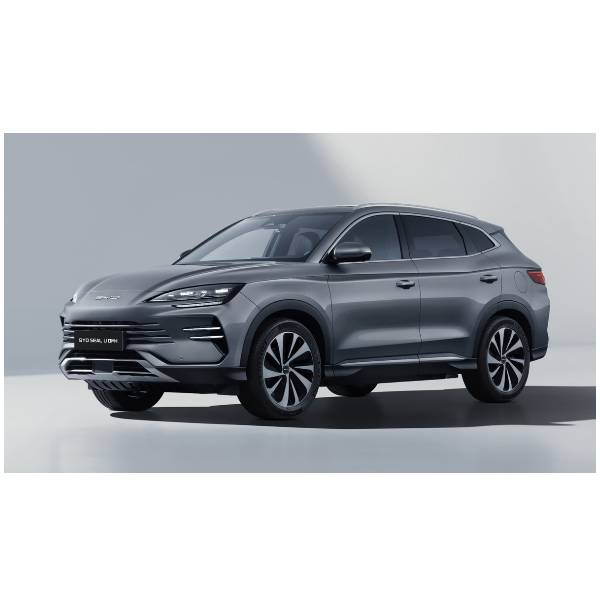
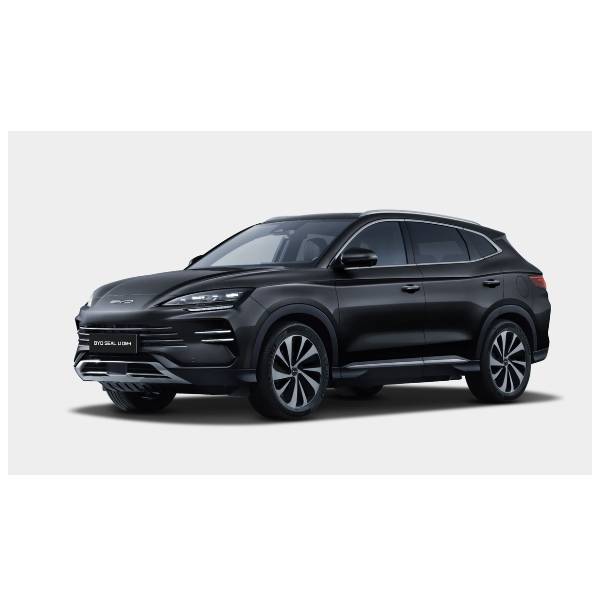
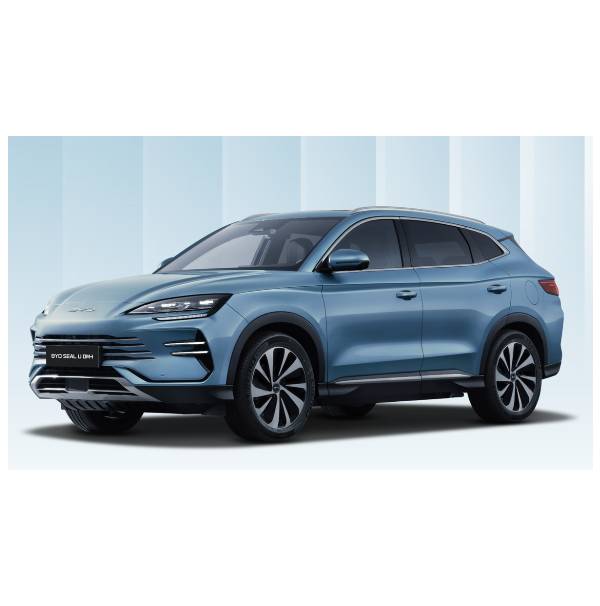
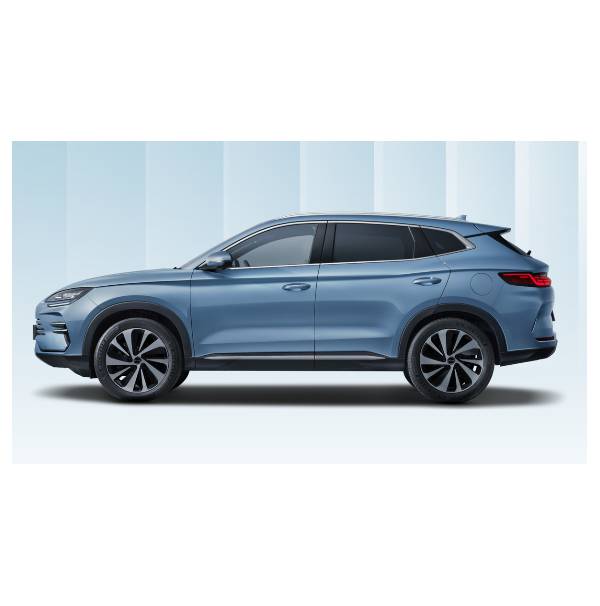
The BYD SEAL U DM-i Plug-In Hybrid SUV (credit: BYD)
| At A Glance | |
|---|---|
| EV Type: | Plug-In Hybrid Electric Vehicle (PHEV) |
| Body Type: | SUV |
| Engine: | Petrol/ Electric |
| Available In Ireland: | Yes |
| Variants (3 Options) |
|---|
| BYD SEAL U DM-i Boost (from € 42,150) |
| BYD SEAL U DM-i Comfort (from € 44,465) |
| BYD SEAL U DM-i Design (from € 49,140) |
| EV Battery & Emissions | |
|---|---|
| EV Battery Type: | Lithium Iron-Phosphate (LFP) |
| EV Battery Capacity: | Available in two battery sizes: 18.3 kWh (339.2 V)/ 26.6 kWh (339.2 V) |
| Charging: | 18 kW DC rapid charging (30%-80%: 35-55 mins). Onboard charger 11 kW AC (15%-100% : 120–192 mins) |
| Charge Port: | Type 2 |
| EV Cable Type: | Type 2 |
| Tailpipe Emissions: | 15-37g (CO2/km) |
| EV Battery Warranty: | 8 years or 160,000 km (70% of the battery’s original capacity) |
| Average Cost Of Residential Charging | |
|---|---|
| Battery net capacity: 12.4 kWh | € 4.25 |
| Battery net capacity: 16.7 kWh | € 5.73 |
| Battery net capacity: 26.6 kWh | € 9.12 |
| Battery net capacity: 30.0 kWh | € 10.29 |
| Battery net capacity: 39.2 kWh | € 13.44 |
| Battery net capacity: 45.0 kWh | € 15.43 |
| Battery net capacity: 50.0 kWh | € 17.15 |
| Battery net capacity: 64.0 kWh | € 21.95 |
| Battery net capacity: 71.0 kWh | € 24.35 |
| Battery net capacity: 77.0 kWh | € 26.40 |
| Battery net capacity: 90.0 kWh | € 30.86 |
| Battery net capacity: 100.0 kWh | € 34.29 |
| Battery net capacity: 112.0 kWh | € 38.40 |
| Battery net capacity: 120.0 kWh | € 41.15 |
| Battery net capacity: 130.0 kWh | € 44.58 |
- Note 1: The average cost of residential electricity in Ireland varies depending on the region, supplier and type of energy used. An average for Ireland is 34.29 cents/kWh. Best to charge an EV overnight when the rates are the lowest.
- Note 2: Not all EV manufactures make available the data on net EV battery capacity, and in a number of instances the EV battery capacity advertised, does not state if it is gross or net capacity. In general, usable EV battery capacity is between 85% to 95% of the gross available capacity.
| Charging Times (Overview) | |
|---|---|
| Slow charging AC (3 kW – 3.6 kW): | 6 – 12 hours (dependent on size of EV battery & SOC) |
| Fast charging AC (7 kW – 22 kW): | 3 – 8 hours (dependent on size of EV battery & SoC) |
| Rapid charging AC (43 kW): | 0-80%: 20 mins to 60 mins (dependent on size of EV battery & SoC) |
| Rapid charging DC (50 kW+): | 0-80%: 20 mins to 60 mins (dependent on size of EV battery & SoC) |
| Ultra rapid charging DC (150 kW – 350 kW): | 0-80% : 20 mins to 40 mins (dependent on size of EV battery & SoC) |
| Tesla Supercharger DC (120 kW – 350 kW): | 0-80%: up to 25 mins (dependent on size of EV battery & SoC) |
- Note 1: SoC: state of charge
| Dimensions | |
|---|---|
| Height (mm): | 1670 |
| Width (mm): | 1890 |
| Length (mm): | 4775 |
| Wheelbase (mm): | 2765 |
| Turning Circle (m): | 11.0 |
| Boot Space (L): | 425 (up to 1,440 L with seats folded) |
| Frunk (L): | N/A |
| BYD Seal Boost | |
|---|---|
| EV Battery Capacity: | 18.3 kWh (339.2 V) |
| Pure Electric Range (WLTP): | 80 km |
| Electric Energy Consumption (km/kWh): | 5.9 |
| Fuel Consumption (L/100 km): | N/A |
| Charging: | 18 kW DC rapid charging (30%-80%: 35 mins). Onboard charger 11 kW AC (15%-100% : 120 mins) |
| Top Speed: | 169 km/h |
| 0-100 km/h: | 8.9 seconds |
| Drive: | Front-wheel drive (FWD) |
| Electric Motor (kW): | 160 |
| Horsepower (ps): | 217 |
| Torque (Nm): | 300 |
| Transmission: | Automatic |
| Seats: | 5 |
| Doors: | 5 |
| Kerb Weight (kg): | 1,940 |
| Towing Capacity (Braked/Unbraked)/ (kg): | N/A |
| Colours: | 4 |
| Euro NCAP Safety Rating: | 5/5 |
| Insurance: | N/A |
| BYD Seal Comfort | |
|---|---|
| EV Battery Capacity: | 26.6 kWh (339.2 V) |
| Pure Electric Range (WLTP): | 124 km |
| Electric Energy Consumption (km/kWh): | 5.6 |
| Fuel Consumption (L/100 km): | N/A |
| Charging: | 18 kW DC rapid charging (30%-80%: 55 mins). Onboard charger 11 kW AC (15%-100% : 192 mins) |
| Top Speed: | 169 km/h |
| 0-100 km/h: | 8.9 seconds |
| Drive: | Front-wheel drive (FWD) |
| Electric Motor (kW): | 160 |
| Horsepower (ps): | 217 |
| Torque (Nm): | 300 |
| Transmission: | Automatic |
| Seats: | 5 |
| Doors: | 5 |
| Kerb Weight (kg): | 1,995 |
| Towing Capacity (Braked/Unbraked)/ (kg): | N/A |
| Colours: | 4 |
| Euro NCAP Safety Rating: | 5/5 |
| Insurance: | N/A |
| BYD Seal Design | |
|---|---|
| EV Battery Capacity: | 18.3 kWh (339.2 V) |
| Pure Electric Range (WLTP): | 70 km |
| Electric Energy Consumption (km/kWh): | 5.0 |
| Fuel Consumption (L/100 km): | N/A |
| Charging: | 18 kW DC rapid charging (30%-80%: 35 mins). Onboard charger 11 kW AC (15%-100% : 120 mins) |
| Top Speed: | 180 km/h |
| 0-100 km/h: | 5.9 seconds |
| Drive: | All-wheel drive (AWD) |
| Electric Motor (kW): | 238 |
| Horsepower (ps): | 323 |
| Torque (Nm): | 550 |
| Transmission: | Automatic |
| Seats: | 5 |
| Doors: | 5 |
| Kerb Weight (kg): | 2,100 |
| Towing Capacity (Braked/Unbraked)/ (kg): | N/A |
| Colours: | 4 |
| Euro NCAP Safety Rating: | 5/5 |
| Insurance: | N/A |
Electric Vehicles (EVs): Top 5 Jargons
There is no doubt, in that, for those new to electric driving, the terminology can be both daunting and confusing. We have chosen the top 5 jargons to help you get more familiar with electric vehicles (EVs)!
| Top 5 Jargons : Electric Vehicles (EVs) | |
|---|---|
| EV (Electric Vehicle) | An EV is any vehicle that uses ‘electricity’ or an ‘electric motor’ to power the vehicle. The electric motor derives its power from a rechargeable battery or batteries. In general, EVs are less dependent on petrol or diesel as fuel, and in the case of pure electric cars, not dependent at all, on petrol/diesel for propulsion. EVs encompass all types of electric vehicles, to include Battery-Electric Vehicles (BEVs), Plug-in Hybrid Electric Vehicles (PHEVs), Extended Range Electric Vehicles (E-REVs) and Fuel Cell Electric Vehicles (FCEVs). |
| Regenerative Braking | Driving at all times requires braking. However, on more densely populated roads, the frequency and intensity of braking increases, reducing the efficiency of the vehicle. Regenerative braking is the process of capturing energy, otherwise wasted during braking. According to the rules of physics, energy cannot be destroyed, instead it simply transfers from one state to another. The same principle applies to braking. The kinetic energy that propels a car forward is usually displaced or wasted as heat. Regenerative braking captures this kinetic energy, that in turn recharges an onboard EV battery, increasing both efficiency and electric range. Electric cars like Toyota Prius PHEV, Jaguar I-PACE BEV and Tesla Model 3 BEV use regenerative braking to increase efficiency and electric range. |
| Torque | Torque (Nm) is the measure of the force that can cause an object to rotate about an axis. Torque is a key factor in determining acceleration of a vehicle and is defined as the engines rotational speed. Torque is most commonly defined as the force required to twist an object. For example, a wrench being used. The heavier a car, the more important is the role of torque i.e. the vehicle needs more rotational force to help it accelerate faster. |
| WLTP (Worldwide Harmonised Light Vehicle Test Procedure) | In a bid to continue to improve the quality of data released by automotive manufacturers (OEMs), on efficiency, range and CO2 emissions, Europe has introduced the WLTP testing procedure. WLTP is seen as a significant improvement over the New European Driving Cycle (NEDC) testing standard designed in the 1980s. In general, WLTP data is more realistic compared to NEDC! WLTP has been developed with the aim of becoming a global standard, so that cars can be easily compared between regions. However, real world driving data will still differ from WLTP data. As an example, the real world electric range of an electric car can be significantly lower than the stated WLTP range, depending on driving style, driving conditions, weather, onboard services used and more! |
| ULEVs (Ultra-Low Emission Vehicles) | An ultra low emission vehicle is any vehicle that emits less than 75g of CO2/km and is capable of operating with zero-tailpipe emissions for at least 10 miles. In general, ULEVs release emissions that are at least 50% lower than petrol and diesel cars, by using low carbon technologies. ULEVs include all types of electric vehicles: BEVs, PHEVs, E-REVs etc. and are a key solution in improving air quality. There are currently numerous ULEVs available, to include e-cars, e-vans, e-motorcycles, e-mopeds and e-taxis. Examples include: Nissan Leaf, BMW i3, MINI Countryman PHEV and Renault Kangoo ZE. |
While e-zoomed uses reasonable efforts to provide accurate and up-to-date information, some of the information provided is gathered from third parties and has not been independently verified by e-zoomed. While the information from the third party sources is believed to be reliable, no warranty, express or implied, is made by e-zoomed regarding the accuracy, adequacy, completeness, legality, reliability or usefulness of any information. This disclaimer applies to both isolated and aggregate uses of this information.
Featured Articles

The All-Electric Mazda MX-30 (SUV): The Complete Electric Car Buying Guide For Ireland
Electric Cars: The Basics For those of you new to zero-emission electric driving, we recommend a read of the following articles: Sign up to the e-zoomed Electric Living newsletter…
Read More
The Lexus NX Plug-In Hybrid (SUV): The Complete Electric Car Buying Guide For Ireland
Electric Cars: The Basics For those of you new to zero-emission electric driving, we recommend a read of the following articles: Sign up to the e-zoomed Electric Living newsletter…
Read More
The Renault Rafale E-Tech Plug-In Hybrid (SUV): The Complete Electric Car Buying Guide For Ireland
Electric Cars: The Basics For those of you new to zero-emission electric driving, we recommend a read of the following articles: Sign up to the e-zoomed Electric Living newsletter…
Read More
The All-Electric Kia EV9 (SUV): The Complete Electric Car Buying Guide For Ireland
Electric Cars: The Basics For those of you new to zero-emission electric driving, we recommend a read of the following articles: Sign up to the e-zoomed Electric Living newsletter…
Read More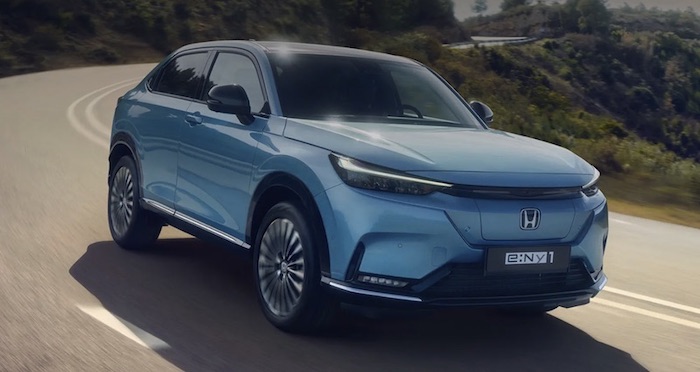
Honda e:Ny1 Electric (SUV): The Complete Electric Car Buying Guide For Ireland
Electric Cars: The Basics For those of you new to zero-emission electric driving, we recommend a read of the following articles: Sign up to the e-zoomed Electric Living newsletter…
Read MoreFeatured Products
-
Best-In-Class Home Solar Bundle Offer (440W Trina Solar 8 Panels + Sungrow Hybrid Inverter 3.0 kW): price includes product supply only – free delivery
Original price was: €3,155.95.€3,075.95Current price is: €3,075.95. (Including VAT)Brand:SungrowTrinaSolarCategory:Solar -
Best-In-Class Home Solar Bundle Offer (440W Trina Solar 8 Panels + Sungrow Battery Storage 6.4 kWh + Sungrow Hybrid Inverter 3.0 kW): price includes product supply only – free delivery
Original price was: €6,115.95.€5,999.95Current price is: €5,999.95. (Including VAT)Brand:SungrowTrinaSolarCategory:Solar -
Bundle Offer: Sungrow Home Battery Storage (6.4 kWh) + Sungrow Hybrid Inverter (5 KW/ Single-Phase): price includes product only – Free delivery
Original price was: €4,549.95.€4,050.95Current price is: €4,050.95. (Including VAT)Brand:SungrowCategory:Battery Storage -
Untethered Ohme Home EV Charger (7kW): price includes product only – free delivery
Original price was: €780.95.€685.95Current price is: €685.95. (Including VAT)Brand:OhmeCategory:EV Charging PointsCable:Untethered -
Custom-Made 1-Phase EV Charging Cable Type 2 to Type 2 (2m to 45m, 7.4 kW) – Made In Europe – Free Delivery
Price range: €219.95 through €645.95 (Including VAT)Category:EV Charging CablesType:Type 2Length (m):5 m10 m6 m15 m20 m2 m25 m30 m35 m40 m45 m3 m7 m8 m12 m18 m22 mCurrent (amp):32 ampPhase:Single Phase (7.4kW)This product has multiple variants. The options may be chosen on the product page


